Susan — As Reported by Leading Chinese Media: The Chinese Woman Received by a Foreign President, Mining on the Pamir Plateau
- Share
- Issue Time
- Jan 19,2026
Summary
This article recounts Susan’s real experiences in mining operations on the Pamir Plateau and in multiple cross-border collaborations. Facing high-altitude conditions, complex environments, and management challenges, she did not begin with prior mining expertise, yet chose to step forward once trust was placed in her. Through hands-on practice, she learned to manage teams, control risks, and engage professional expertise, holding “not betraying trust” as a guiding principle.
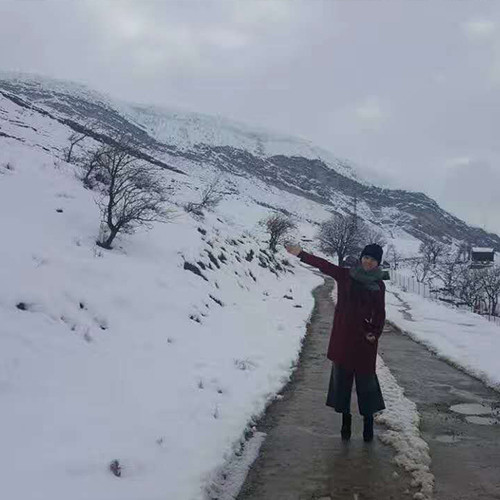
The mining area on the Pamir Plateau sits at an altitude of over 3,000 meters.
The wind cuts straight across the face, sharp and biting. Walking just a little faster leaves people breathless. The sound of machines echoes loudly through the vast mountains, yet instead of feeling lively, it feels isolated.
This place is far from the nearest city. Supplies, transportation, maintenance—any issue in any step is magnified by the plateau. The temperature difference between day and night is extreme. The sun during the day can make people dizzy, and once night falls, the cold presses in. Many people who come here for the first time struggle even to sleep.
When Susan first stood here, she did not feel a surge of heroic ambition. She knew clearly that this was not a place where mistakes could be made. Once a decision was taken, every consequence would be paid for in reality, one by one.
The mine has been developed bit by bit under these conditions. From 2018 to today, more than eight years have passed.
Susan has continued her search for mining opportunities in Tajikistan without stopping. Every month, she flies from Guangzhou to Tajikistan. Few would have imagined that a Chinese woman would mine stone in this place.
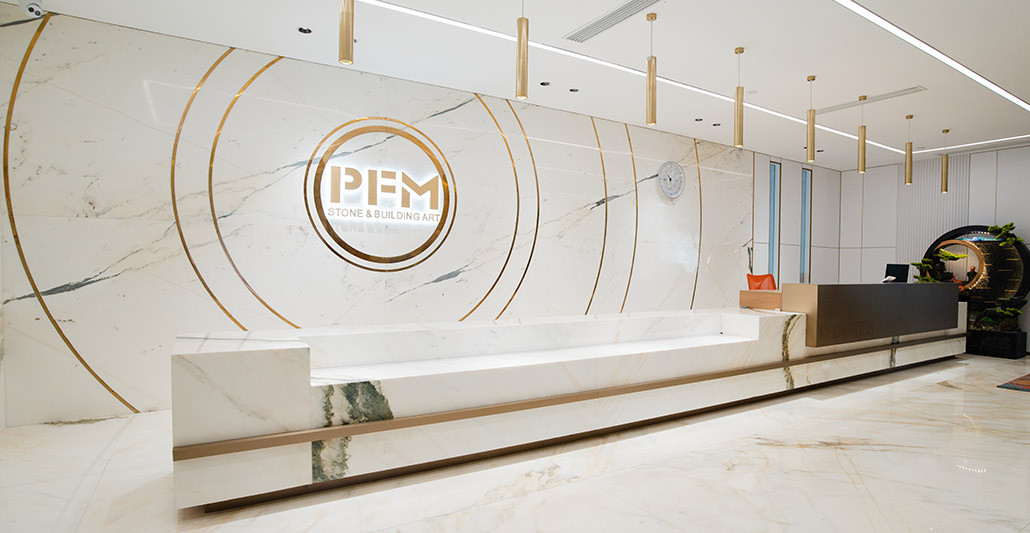
Susan, whose Chinese name is Chen Yanli, is the founder of Guangzhou PFM IMP. & EXP. CO., LTD (PFM). Her company is located in the International Design Capital building in Baiyun District, Guangzhou. PFM focuses on top-tier overseas interior projects, large-scale public buildings, artistic luxury residences, palaces, and villas.
The Qatar National Security Building, Modern Luxury Private Villas in Doha, the Tajikistan Dushanbe National Stadium, the residence of the Vice President of Chechnya—these are all representative projects of PFM.
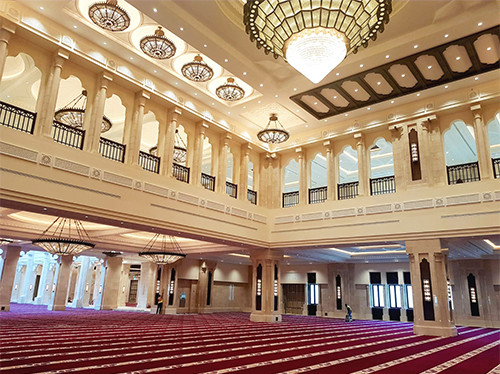

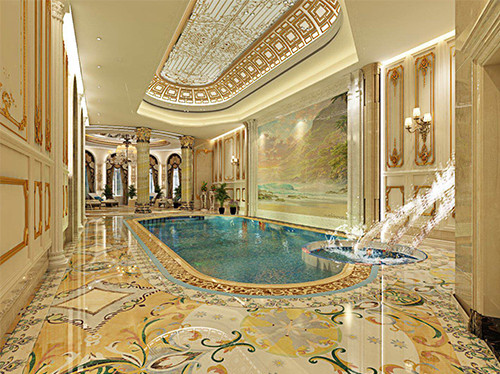
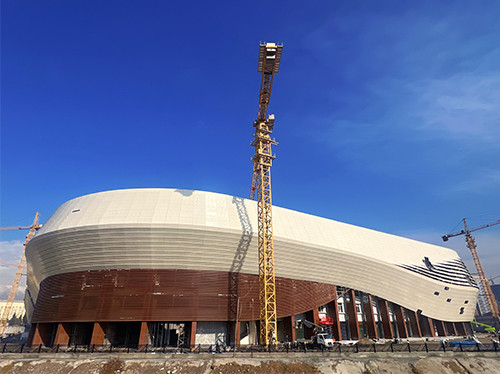
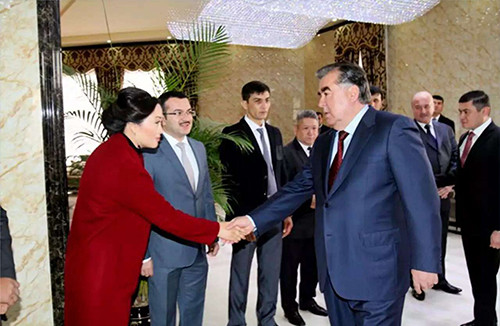
After nearly twenty years of entrepreneurship, Susan's clients span 117 countries worldwide. In 2015, she was received by the President of Tajikistan. Remarkably, she not only mines stone overseas but also built a national stadium for Tajikistan. What is the story behind her journey?
Story Series 01
A Freshman Who Chased an American Professor
“As long as there is an opportunity, I will seize it.”
“As long as there is an opportunity, I will seize it.”
Susan was born in 1980 in a rural village in Jieshou, Anhui Province. Her family was poor, and from a young age she wanted to rise above her circumstances.
Her family was steeped in a strong preference for sons over daughters. Her father sighed at her birth and even discussed giving her away or exchanging her with relatives for a boy.
Although her mother was a farmer and illiterate, she could not bear to give up her first child. A year later, Susan’s younger brother was born. As a child, Susan was breastfed for only two or three months before it stopped, as her mother needed to feed her brother.
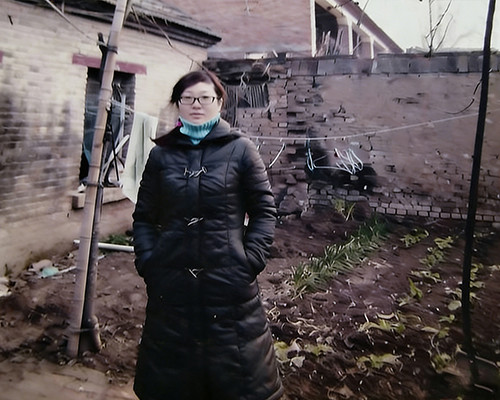
As a child, she would eagerly look forward to the days when the village held its market fair. Yet most of the time, what followed was deep disappointment — more often than not, only her younger brother was taken along.
She was always determined to prove herself, and studying was the only way she knew how. Although English education in that era only began in middle school with the alphabet, Susan's English stood out, driven by an intense passion for the language.
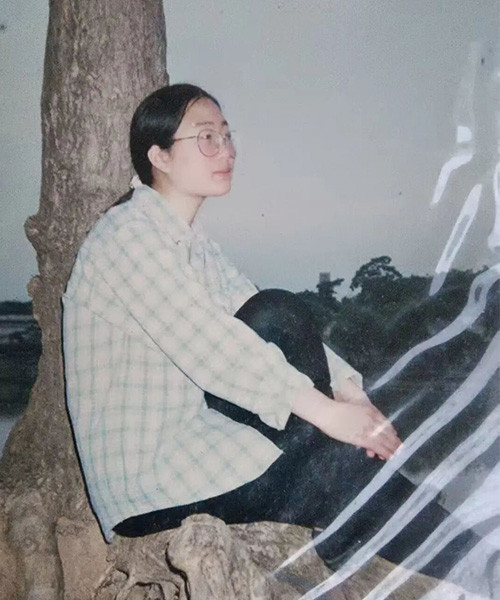
She longed to step beyond the village — to change the fate of rural life, and to change her own fate of being overlooked.
At university, she majored in architectural engineering. The school had one American foreign teacher, but he only taught third-year students.
As a freshman, Susan sought out the foreign teacher every day. She practiced spoken English with him whenever possible and often asked whether he needed any help. Once, when the teacher fell ill, she even accompanied him to the hospital.
“As long as there was an opportunity, I had to seize it,” Susan said. He was the only foreign teacher at the school, and she was determined to master English.
Susan developed fluent English, which later laid a solid foundation for her career in international trade.
Story Series 02
Her First Pot of Gold
She Went to Israel to Promote Marble Tiles Door to Door
In 2006, after resigning from a foreign trade company, 26-year-old Susan began her entrepreneurial journey, focusing primarily on marble trading.
At that time, she was dating an Israeli man. On one occasion, she traveled to Israel and asked her boyfriend to take her to a local building materials market. Holding a piece of mosaic tile in her hands, Susan stood in the market and promoted it directly to potential customers.
By chance, an Israeli client left his contact information. Three months later, when he planned to visit China for the Canton Fair, he thought of asking Susan to take him to visit factories.
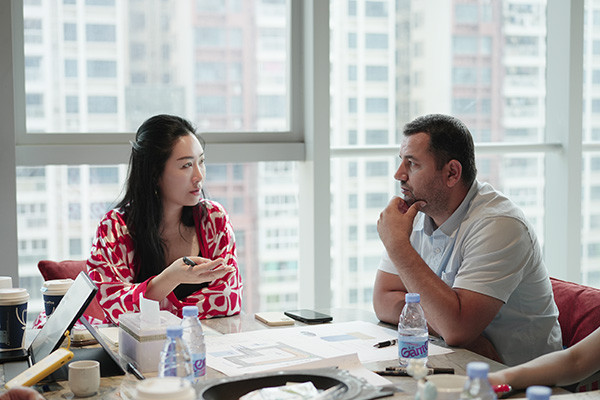
Susan took him to visit factories and enthusiastically introduced mosaic products in detail. Eventually, the client placed an order worth USD 30,000—Susan’s very first order. As the client required a letter of credit, Susan needed to register a company, and thus Guangzhou PFM IMP. & EXP. CO., LTD. was established.
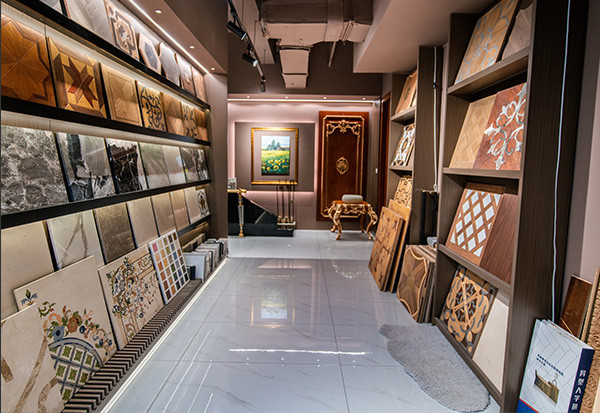
Remarkably, Susan did not have the money to pay a deposit to the factory, yet the factory owner was willing to trust her and ship the goods first, making the deal possible. This became Susan's first capital accumulation—an order came before the company itself.
Encouraged by this success, Susan proactively contacted other clients she knew, hoping they would place orders with her. She promised better quality and more competitive prices. However, that time, things went wrong.
It turned out that the factory’s packaging was inadequate, and the samples arrived broken. The client was very upset, and Susan felt deeply embarrassed.
After repeatedly asking for another chance, Susan persuaded the client to trust her once more. This time, she went directly to the factory and stayed there for two full days and nights, personally overseeing production and packaging.
Exhausted at night, she pushed together several chairs and fell asleep beside the production line. The workers felt sorry for her and suggested she stay at a hotel at night and return in the morning. Susan refused, knowing that her mind would not be at ease if she left the factory. When the second batch of samples was delivered, the client was very satisfied and began placing long-term orders with Susan.
Exhausted at night, she pushed together several chairs and fell asleep beside the production line. The workers felt sorry for her and suggested she stay at a hotel at night and return in the morning. Susan refused, knowing that her mind would not be at ease if she left the factory. When the second batch of samples was delivered, the client was very satisfied and began placing long-term orders with Susan.
At that time, Susan spent all the money she earned not on clothes or handbags, but on one thing only—making her showroom more beautiful, improving her company’s space, and investing in better talent. Her business continued to grow as a result.
Story Series 03
Her Connection with Tajikistan Began During Pregnancy
Six Months Pregnant, She Worked Until 3 a.m.
By 2015, Susan’s company PFM had grown considerably, with an expanding sales team and business covering more than 100 countries worldwide.
One day, a salesperson told her, “Boss, a client is coming tonight to negotiate prices.”At around 9 p.m., Susan—more than six months pregnant—stayed at the office to wait for the client.
Susan received several guests from Tajikistan. During the discussion, she noticed issues with the pricing of the exterior wall for their construction project. The structure did not require solid stone; if it were solid, the entire facade would be unable to bear the load and could collapse.

With a background in architectural engineering, Susan was highly familiar with construction materials and techniques. She proactively pointed out the issue and proposed a new solution that reduced the overall cost by more than 10%. The clients found Susan highly professional and trusted her judgment. In addition to finalizing the exterior wall design, they asked whether she could also provide interior solutions.
The clients found Susan highly professional and trusted her judgment. In addition to finalizing the exterior wall design, they asked whether she could also provide interior solutions. As the client planned to build a spa facility, Susan recommended mosaic materials, which were lightweight, easy to transport, and cost-effective. She offered multiple design options. With many samples on display at her company, Susan guided the clients through them one by one, explaining the applications and design solutions in detail.

Before they realized it, the discussion had stretched from after 9 p.m. until 3:30 a.m. The clients were all men, and they deeply admired Susan's dedication and professionalism. Afterward, the clients commented, “This woman is remarkable. She has never been pampered and treats her work with extreme seriousness. She is someone worth learning from.”
Six months pregnant, Susan not only completed this project order, but the client also requested PFM to handle installation and later entrusted the company with villa renovation projects.
No one knew at the time that this was only the beginning of Susan’s connection with Tajikistan—nor did Susan know that she would later influence and help drive the development of the country’s mining industry.
Story Series 04
Eight Years of Mining
Her Perseverance on the Pamir Plateau
After the completion of the private luxury villa project in Tajikistan, the client hoped that Susan could offer a discount on the final payment.
Susan did not agree to lower the price. Instead, she advised the client, “Granite is inexpensive in China, but transportation costs are very high, and when tariffs are added, the price increases significantly. Perhaps your country could develop local mining. With so many mountain ranges, there must be mineral resources, which would eliminate the need for imports.”
This was not, in fact, a “smart business suggestion.” If the client succeeded in local mining, it would mean no longer needing to purchase stone from her in the future.
At that moment, Susan was not thinking from the position of a seller, but from the perspective of the client's long-term interests.
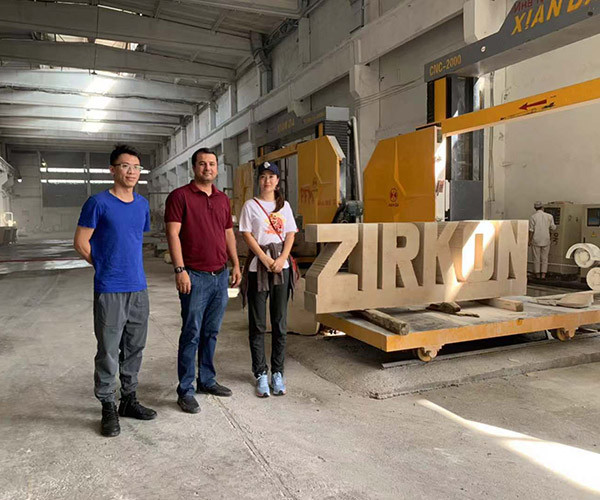
The client asked, “Can you help me purchase some mining equipment?”Susan agreed.
She consulted experts and helped source equipment. At the time, she had no intention of becoming involved in mining herself, nor did she realize that this suggestion would lead her down an entirely different path.
It later emerged that her client was a political figure in Tajikistan. Acting on her advice, the client instructed the geological department to conduct resource exploration.
Previously, Tajikistan had not developed a systematic mining industry. It relied largely on imports, with only scattered small-scale extraction operations.
The process of searching for mineral resources was not smooth. At first, they discovered only a yellowish limestone with large reserves.
It was not until more than two years later, on the Pamir Plateau, that they finally discovered an extremely valuable stone—Milano White.
Only after becoming truly involved did Susan realize that this endeavor was far more difficult than she had imagined.
It was not until more than two years later, on the Pamir Plateau, that they finally discovered an extremely valuable stone—Milano White.
Only after becoming truly involved did Susan realize that this endeavor was far more difficult than she had imagined.
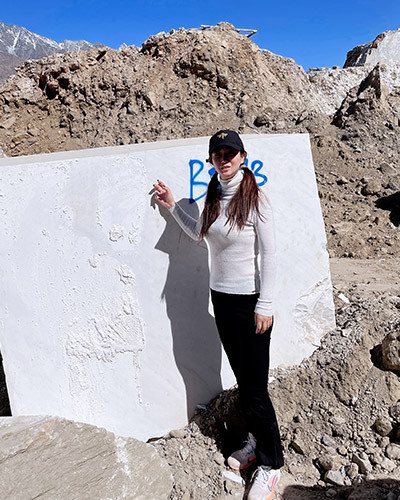
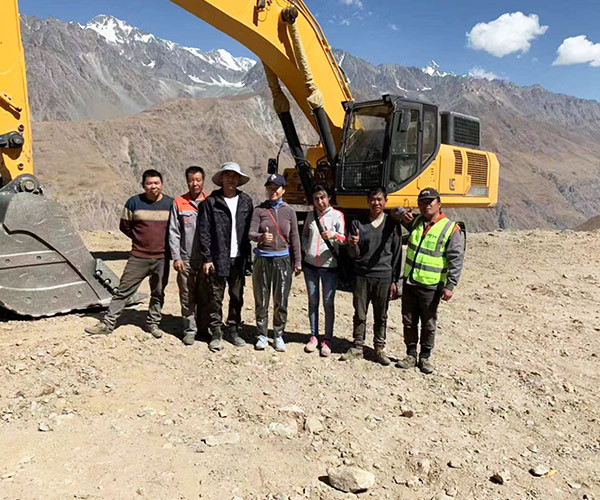
The mining area, located on the Pamir Plateau, had no water and no electricity, and the environment was extremely isolated. During the day, operations barely relied on meltwater from the snow-capped mountains. Once winter arrived and the water froze, there was almost nothing left. Each year, there were only six months suitable for actual mining operations. The area also lies within an earthquake zone. The mountains frequently tremble, fracture zones are dense, and the stone yield rate is only 1%.
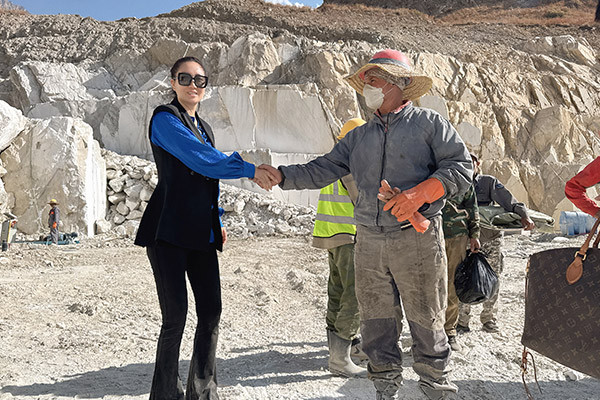
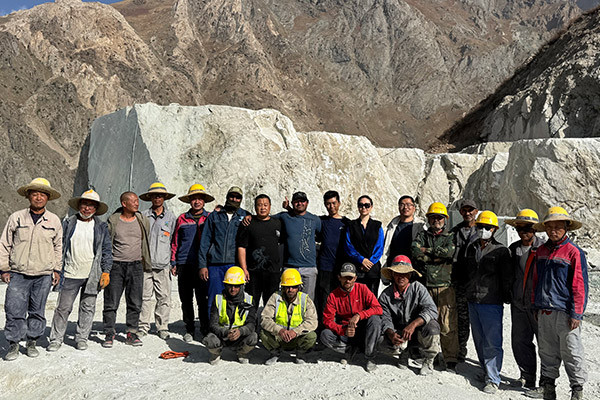
This meant that the vast majority of efforts would turn into waste. Many people would have chosen to cut their losses at this stage. Susan did not. She described her mindset at the time: “A mine can only be managed with patience and calm, like raising a child.”
Every year, there were up to six months when construction was impossible. There was no electricity, yet they persisted.
In June of this year, the factory at the foot of the mountain was finally completed. On more than 40,000 square meters of land, warehouses and workshops were built one after another, and the President of Tajikistan personally attended the ribbon-cutting ceremony.
Every year, there were up to six months when construction was impossible. There was no electricity, yet they persisted.
In June of this year, the factory at the foot of the mountain was finally completed. On more than 40,000 square meters of land, warehouses and workshops were built one after another, and the President of Tajikistan personally attended the ribbon-cutting ceremony.
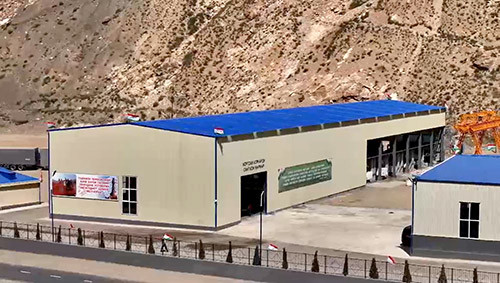
Today, some buildings in Tajikistan have begun using locally quarried stone. Seeing this, Susan feels genuine relief and satisfaction.
That initial, unselfish suggestion of hers changed the way an entire country relies on stone materials.
Looking ahead, she hopes that Tajikistan’s precious Milano White stone will be seen by people around the world.
Story Series 05
The National Stadium
She Turned "USD 100,000" into an Integrated System
At the very beginning, the client called Susan and said, “We have a national stadium project.”
When Susan heard the words “national stadium,” her first reaction was not to quote a price, but to think: What do famous stadiums around the world look like? What kind of lines and presence are worthy of a “national-level” building?
She began searching for case studies online, taking screenshots and sending them to the client one by one, asking, “Which do you like?”
The client selected several concept images and said they wanted a sense of undulation and flowing lines.
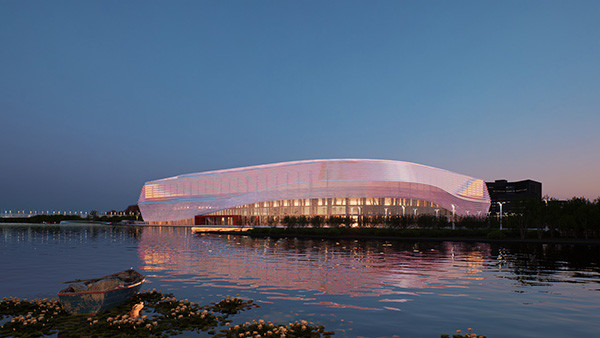
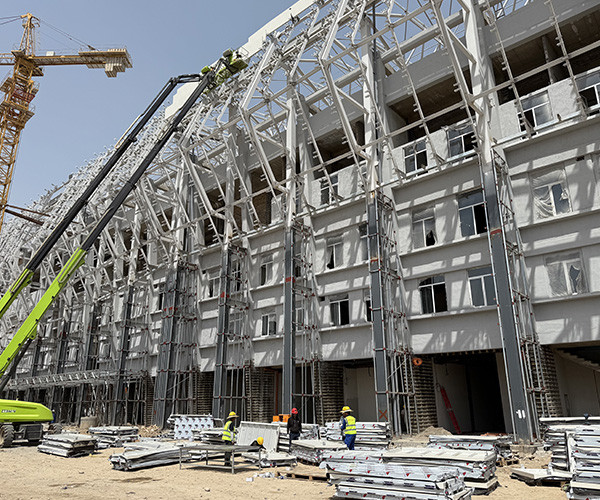
Susan took this “feeling” and discussed it with designer friends. Based on the client’s existing structural model, the designers produced the first concept for the exterior skin. Originally, the stadium was just an oval “cup,” with the main structure already completed. The question was: how could an exterior skin be added? And how could it not only look good, but also stand safely?
At the time, she quoted USD 100,000. Both she and the client believed this amount was only for exterior renderings and lighting concept design.
When Susan found top professionals in China to turn a visually appealing rendering into a buildable system—how the exterior skin would be converted into a steel structure, how the steel structure would connect to the existing building, how the aluminum curtain wall system would be installed, and how the lighting system would be implemented—she came to understand that what they were actually doing was a “systems engineering project.”
At that moment, she was shocked as well—a stadium is not just an exterior skin, but a complex structure broken down into dozens of components and then reassembled into a complete system.
She gradually completed the internal systems of the stadium one by one: competition-standard lighting, LED displays, flag-raising systems, scoring systems, media systems, and cameras; as well as mechanical and electrical systems, strong and weak current systems, Wi-Fi, surveillance, access control, and ticketing systems.
The design of this entire system cost RMB 1 million.
She also brought the client to one of China’s top design institutes. The architectural consultants, who had participated in large airport projects, immediately pointed out problems with the original structure: the roof could not be flat—it needed to be raised and curved to avoid downward pressure. The original plan required systematic adjustments.
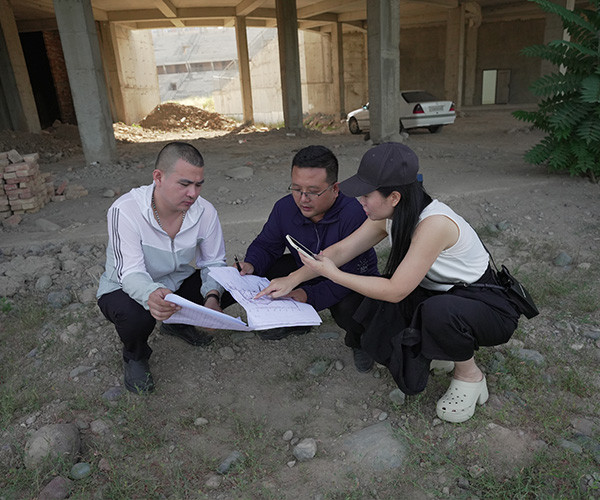
After reviewing everything that day, the client visibly relaxed, feeling that Susan had found truly professional experts.
Later, the client learned that the actual cost of the entire system was RMB 1 million, equivalent to about USD 150,000 at the time. However, she charged only USD 100,000. The remaining USD 50,000 was covered by Susan herself.
She did not see this as a loss, but simply as doing her utmost to help the client.

In 2024, the client prepared to officially launch the construction of the national stadium. At that moment, they suddenly asked her, “Do you want to take on this project?”
Susan was startled, and her first reaction was to refuse.
After several days of hesitation, she reviewed the entire process—from concept to system, from structure to details. All the designs were in her hands.
From structural design to exterior skin and undulating effects, she understood everything most clearly.
In the end, she decided to say, “Then I will do it.”
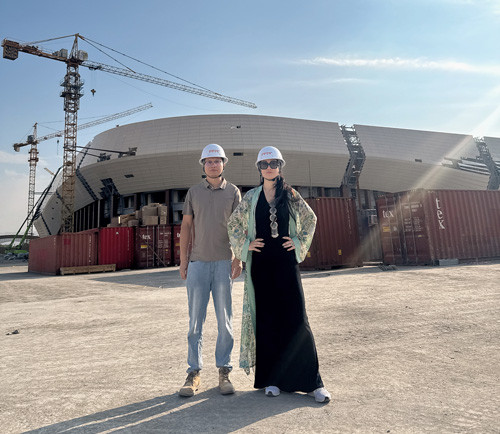
Looking back on this experience, even she herself calls it “legendary”—building a national-level stadium for Tajikistan.
She said, “Tajikistan has a special connection with me. To receive such trust and to build this national stadium well gives me a great sense of achievement.”
Today, the national stadium is under active construction and is expected to be completed in June 2026.
Susan's impression as reported by journalists from well-known Chinese platforms
Whether it is a mine, a stadium, or repeated cross-border collaborations, what Susan has always cared about is this: when others entrust something to you, can you do it well and live up to that trust.
At the mine on the Pamir Plateau, she was not the person who understood machinery the best, nor did she know how to manage a mine from the very beginning.
She had been deceived by workers and had taken many detours. It was only after everyone else had withdrawn that she realized she was already standing at the very front.
She said that she was pushed to the front out of necessity, but she did not step back.
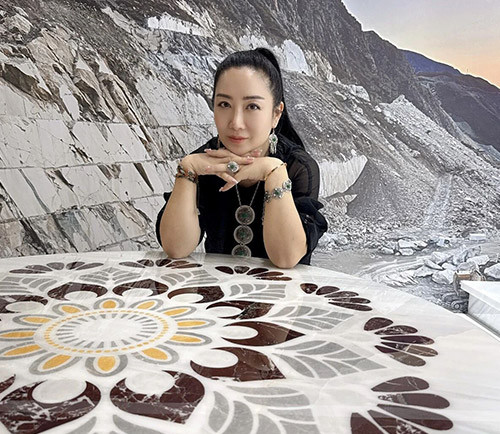
She learned how to manage people, how to control losses, how to study the structure of the mountains, and she invited experts to act as consultants.
Despite the enormous challenges facing the mine, Susan moved forward without hesitation—not because she was interested in mining itself, but because someone had already placed their trust in her.
This mindset also extended to her relationship with Tajikistan.
Despite the enormous challenges facing the mine, Susan moved forward without hesitation—not because she was interested in mining itself, but because someone had already placed their trust in her.
This mindset also extended to her relationship with Tajikistan.
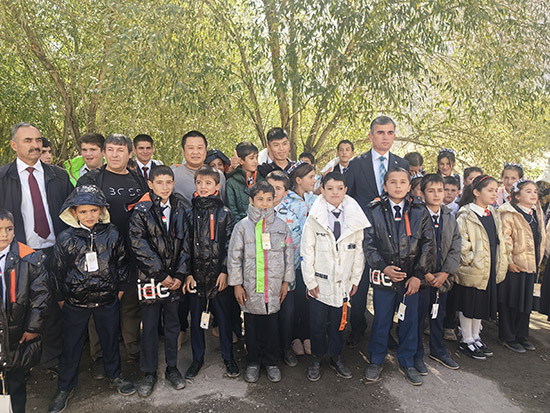
In Tajikistan, she has given local children computers, clothes, and chocolate snacks.
When she talks about these things, her tone is calm and matter-of-fact. She simply says, “The conditions for the children there are indeed very difficult.”
In those children who asked her for old computers and clothes, she saw her former self from long ago—the child who had walked step by step out of a small rural village, who nearly ended up sleeping on the streets, yet was unconditionally trusted and helped by many people.
By giving computers to children in mountainous areas, she knows that being seen and being trusted can change a person's entire life.
That is why she is willing to give away whatever she can, so that the children know: the world is bigger than the place right in front of them.
She is deeply grateful for the trust of her clients, and she also holds a profound emotional attachment to Tajikistan.
Susan is a person of genuine emotions. She did not arrive where she is today because she was fearless.
She always remembers that she was once entrusted with trust, and once given the chance to be fulfilled.
This memory has carried her step by step to where she is today, and it continues to drive her forward with courage on the road of entrepreneurship.